BRTR: Barter more confidently than ever before.
A mobile app focused on making bartering safer and more reliable. BRTR uses ID verification, ratings, reviews, and communication tools like chat and video to help users securely exchange goods and services while building trust.
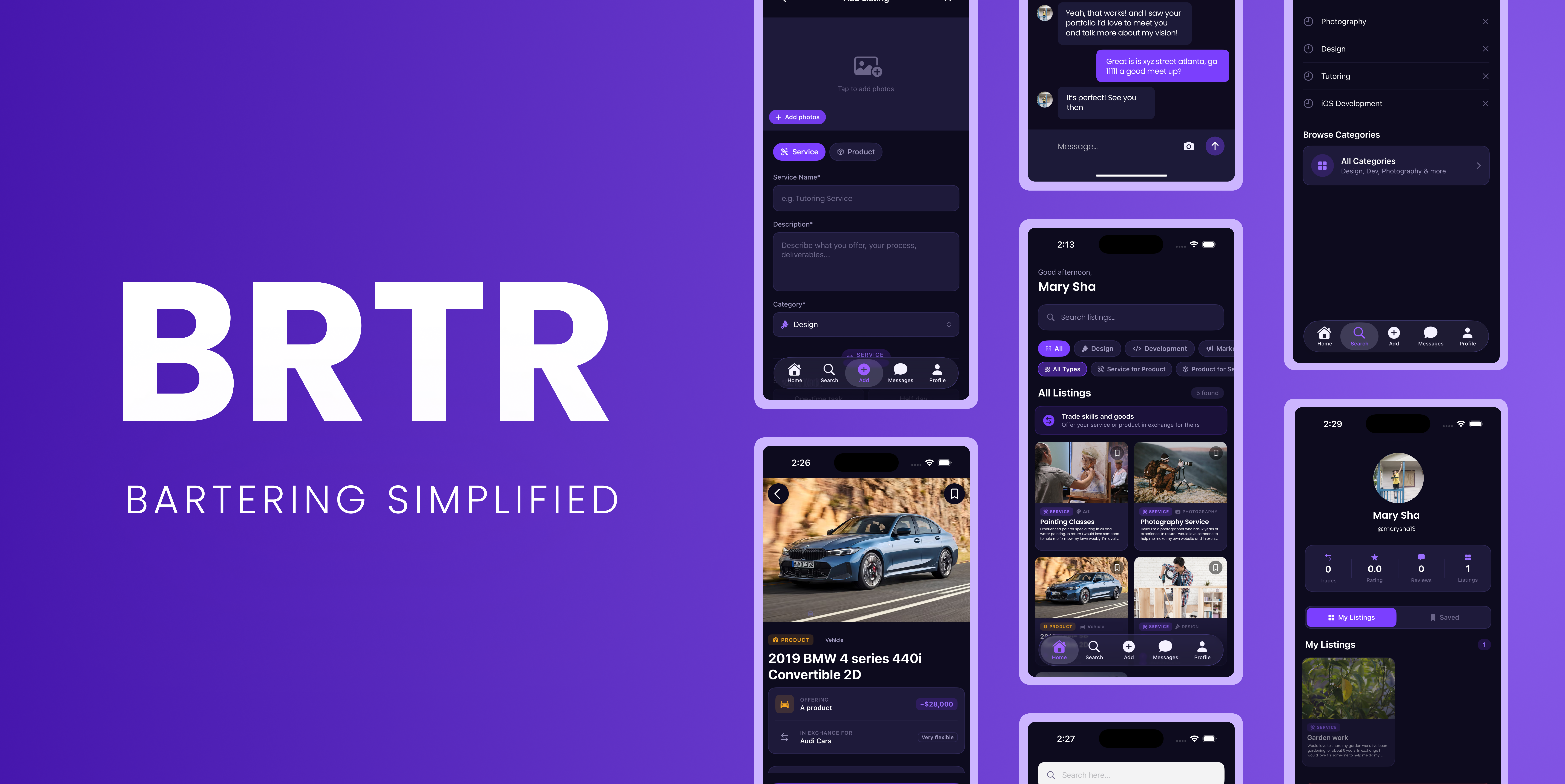
Safety and trust changed everything.
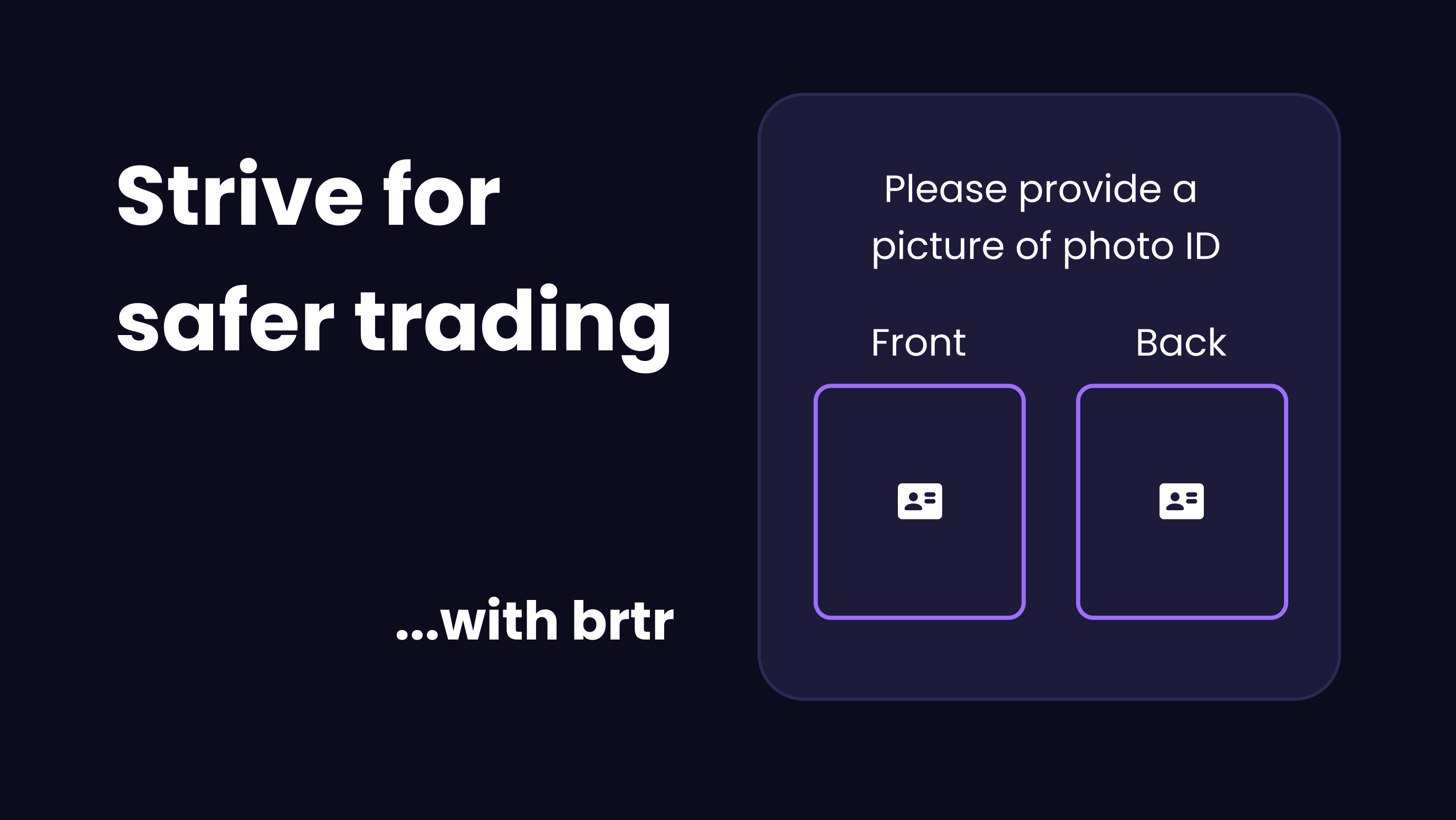
We created three features to help users feel more safe and informed: ID verification to hold users accountable, a rating and review system for transparency, and chat plus video tools for direct communication about product and service quality.
People want to barter but don't feel safe.
Over 70% of our research candidates stated that they barter. But about half of those who barter said they were hesitant to do so. The main pain points all came back to two things: seller credibility and personal safety.
There was no existing platform that treated these concerns as first-class design problems. Craigslist is a free-for-all, Facebook Marketplace focuses on selling not trading, and Nextdoor is hyper-local but has no bartering framework. BRTR needed to solve the trust problem from the ground up.
User pain points
- No way to verify who you're trading with
- Concerned about meeting strangers for exchanges
- Can't assess quality of services before committing
- No accountability if a trade goes wrong
Market gaps
- Existing platforms focus on buying/selling, not bartering
- No dedicated space for service-based exchanges
- 13% have bartered; 87% don't know how to start
- No trust infrastructure for peer-to-peer trades
37 surveys, real pain points.
We surveyed 37 respondents to understand motivations and concerns around bartering. The surveys were supplemented with user interviews that dug deeper into specific scenarios: what would make someone comfortable trading a skill with a stranger? What would make them walk away?
Key insights shaped every design decision: safety and credibility were the top barriers, most people had services they could offer but didn't know a platform existed for it, and the biggest opportunity was in service-based bartering rather than goods.
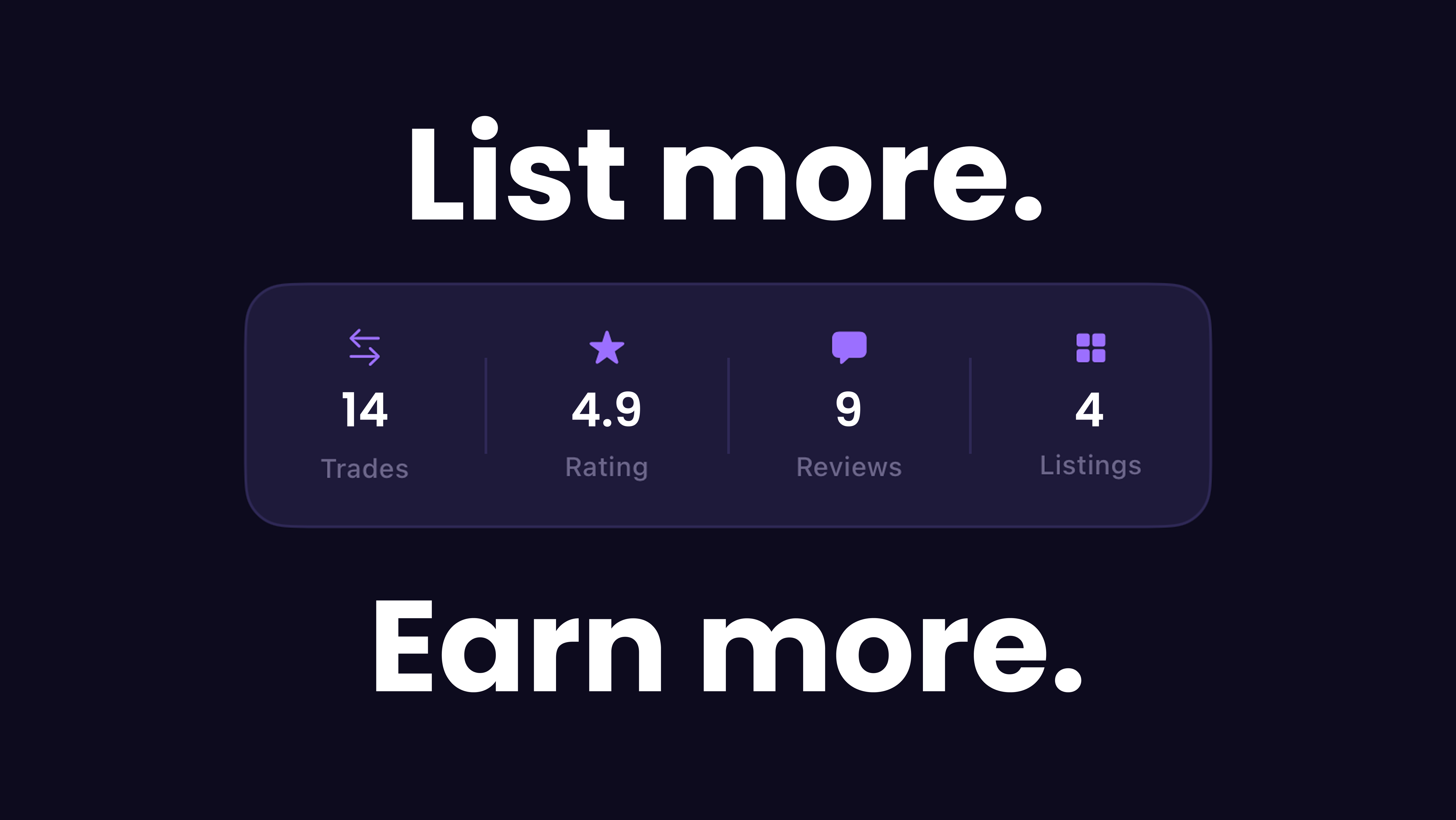
Research to shipped prototype.
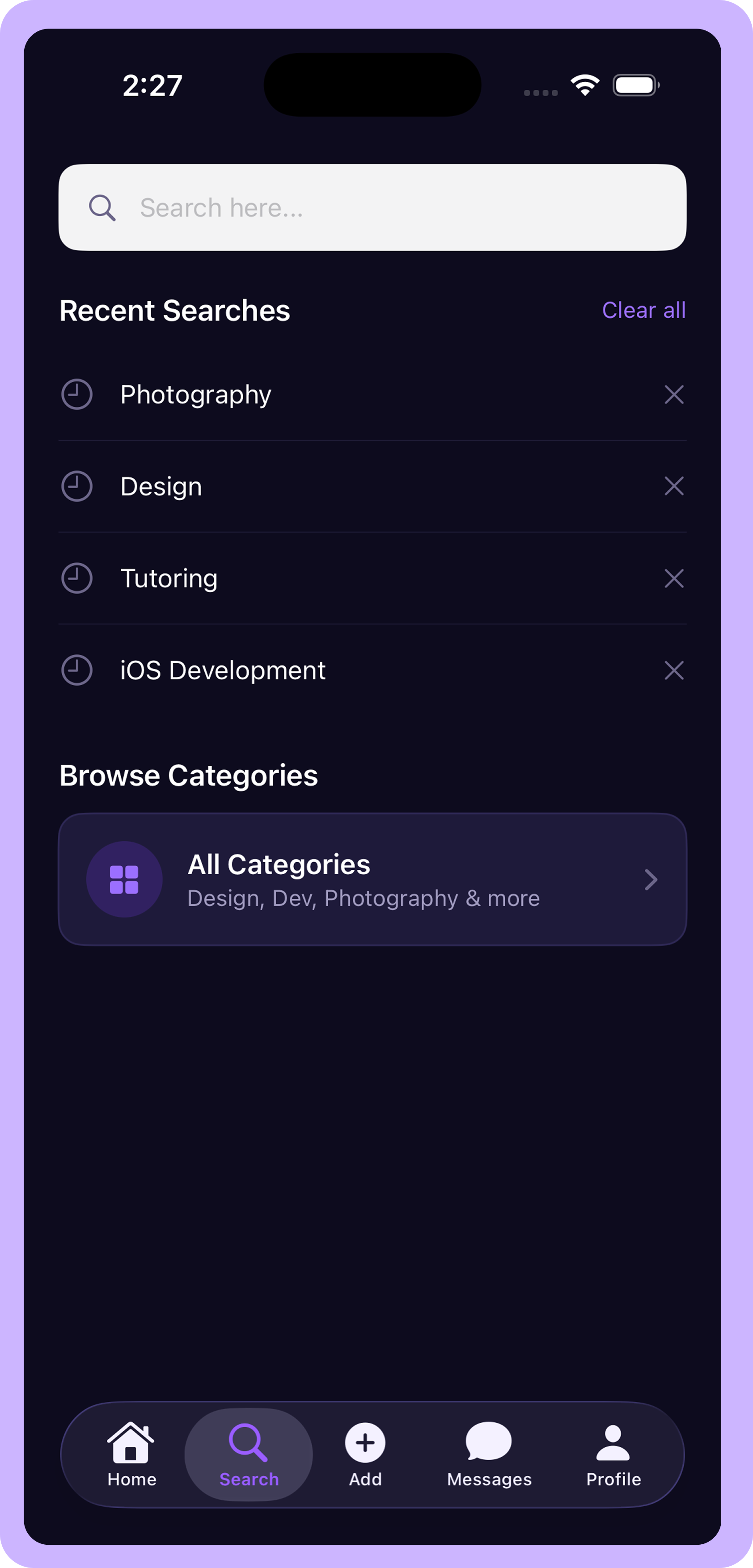
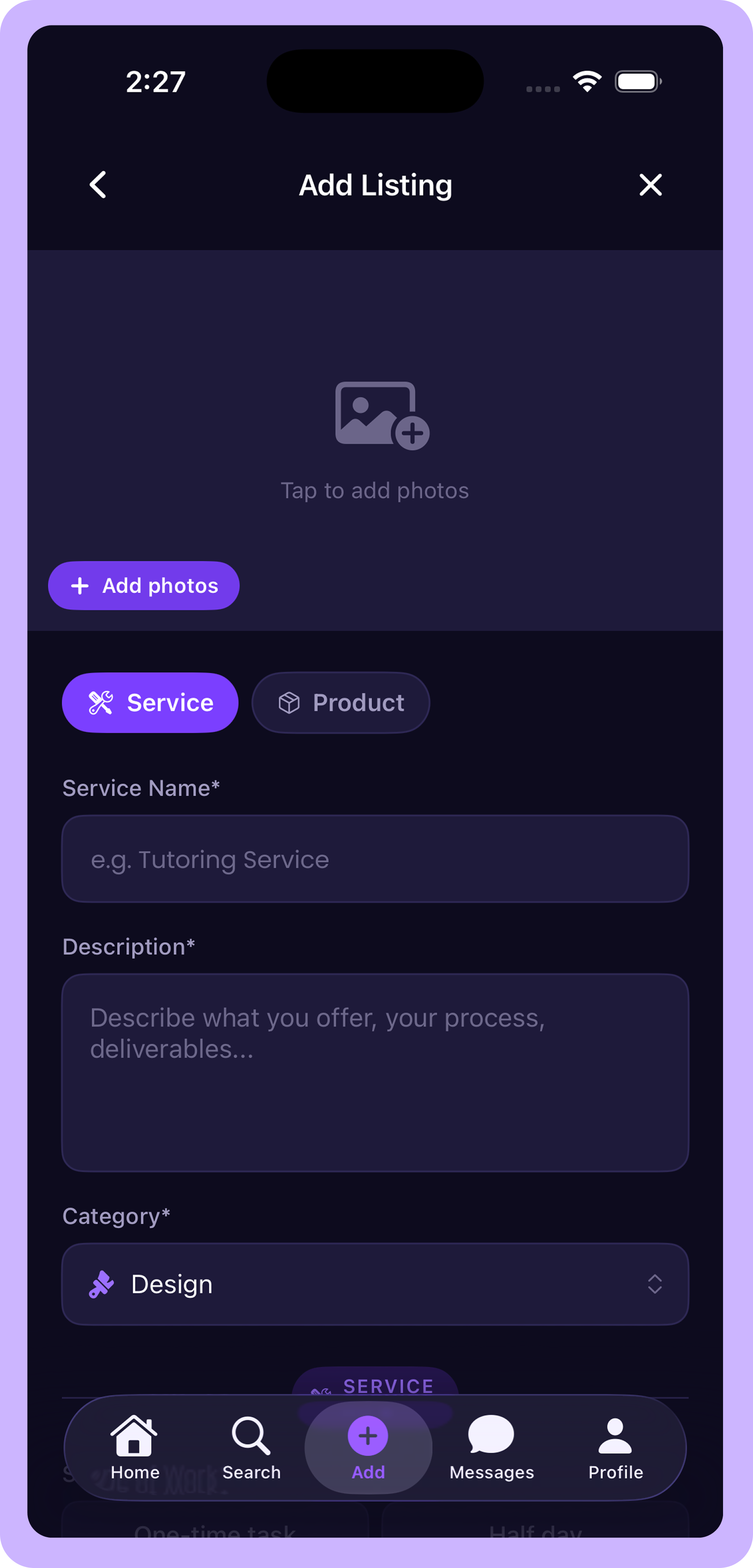
The information architecture mirrors Facebook Marketplace but reframes it for services rather than goods. Users can browse or post service listings based on their needs, offering their own skills as part of the exchange. Key flows: profile creation, service browsing by category, messaging for negotiations, and verification checks.
Three features that build trust.
ID Verification
Users verify their identity before trading. This holds people accountable for their actions and gives the other party confidence that the person is who they say they are. 89% of users said this feature made them feel safer.
Ratings & Reviews
Every completed trade generates a review. Users can see a seller's history, delivery quality, and reliability before committing; creating a transparent reputation system that rewards good behavior.
Chat & Video
Direct messaging and video calls let users discuss trade details, verify service quality in real-time, and negotiate terms before meeting; reducing uncertainty and building rapport before the exchange.
The shipped designs.
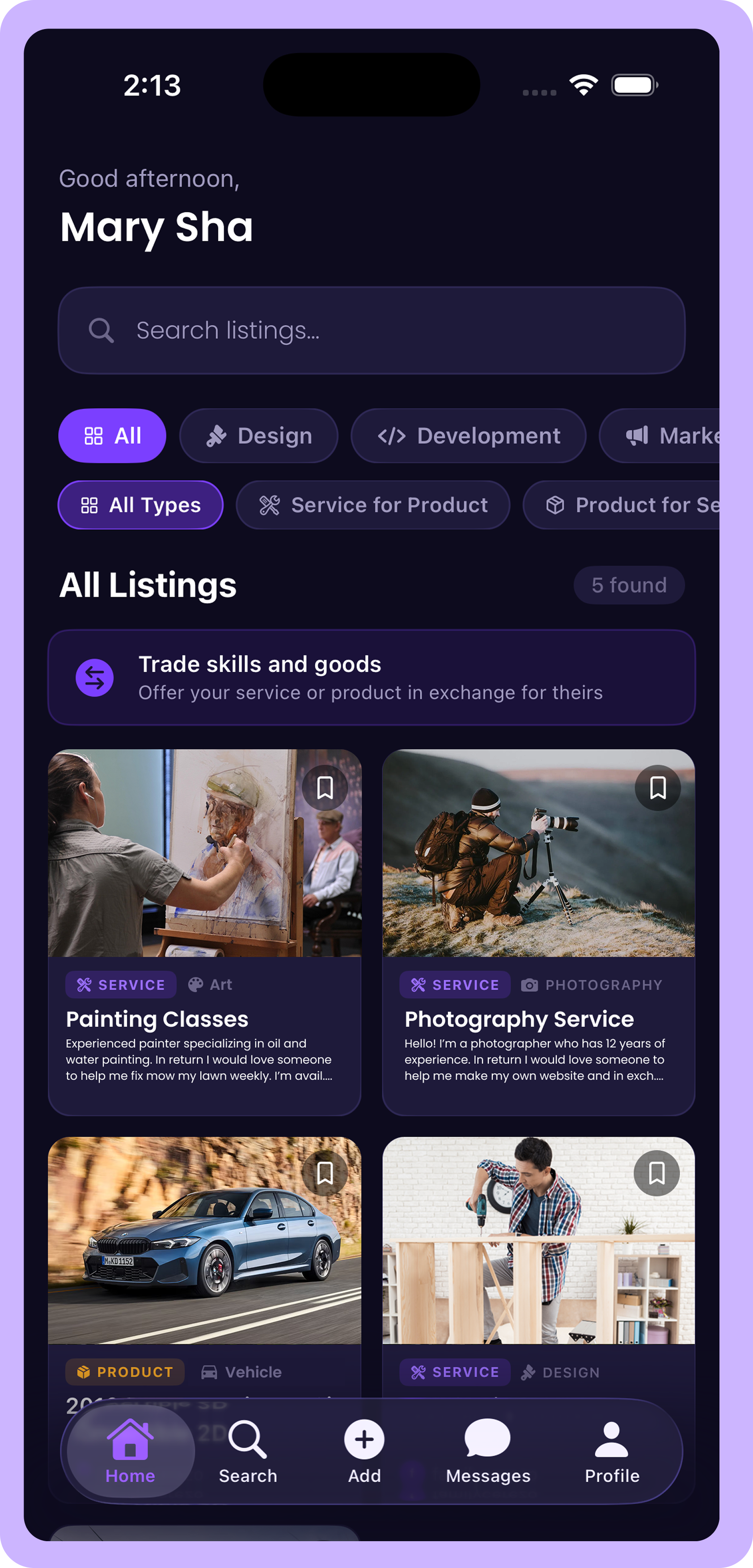
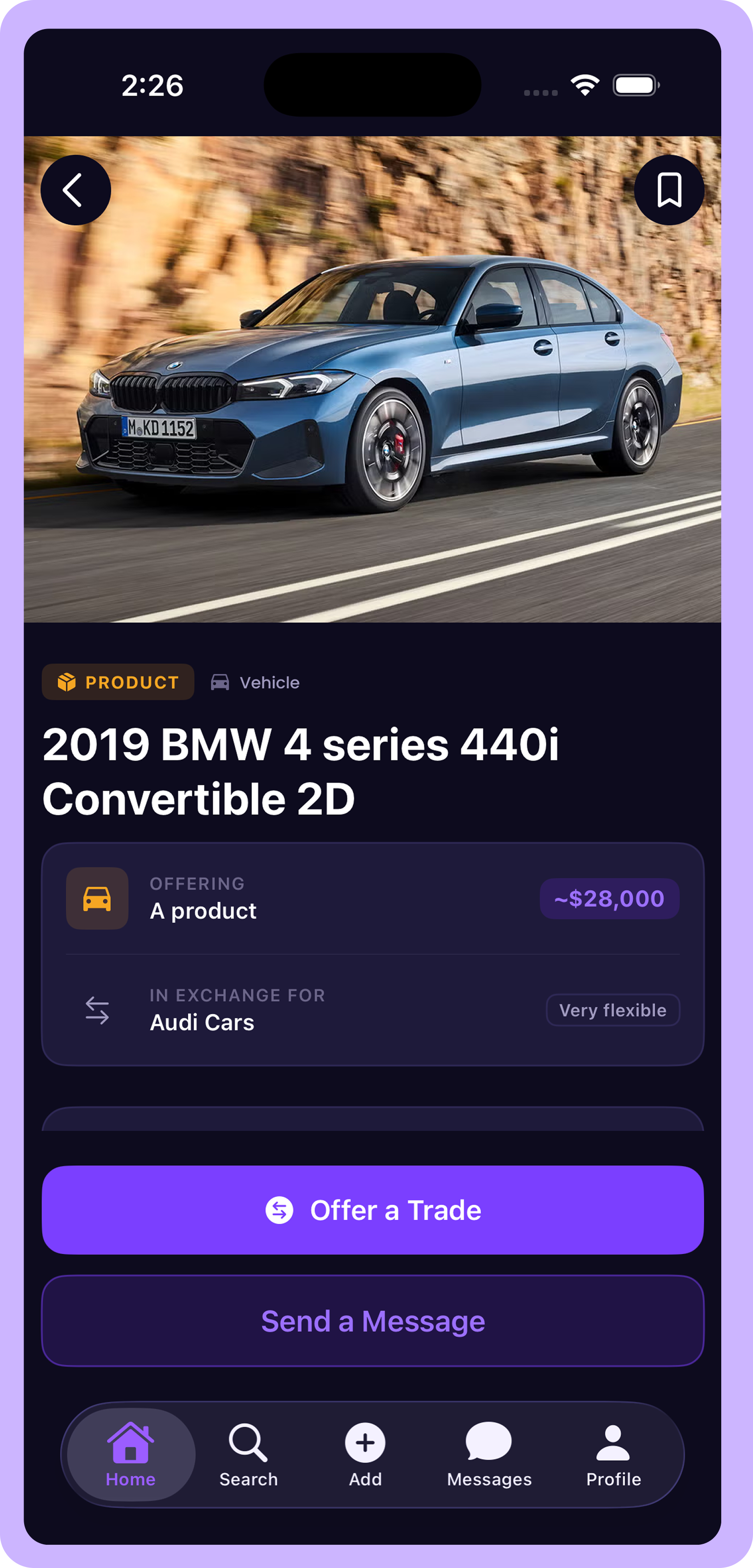
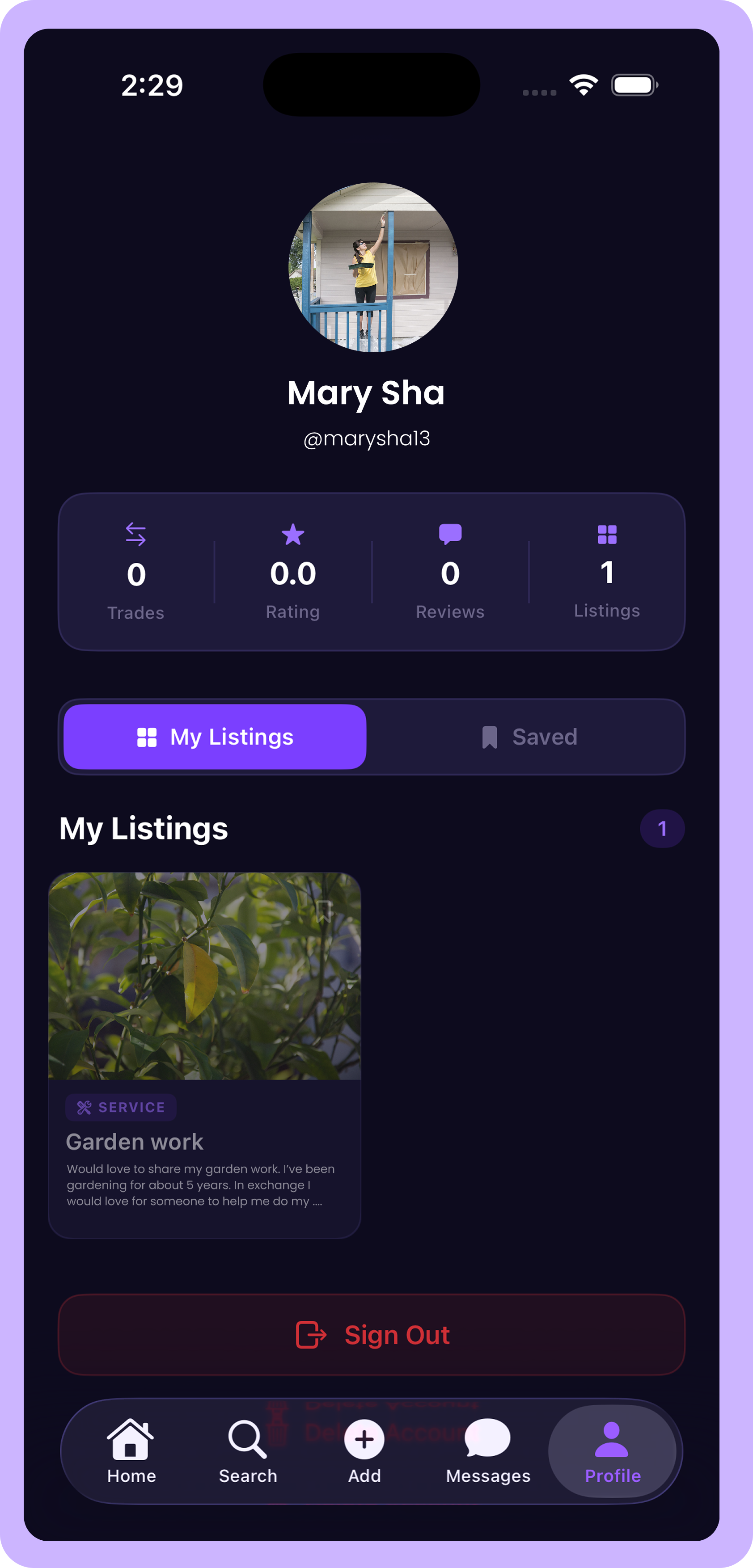
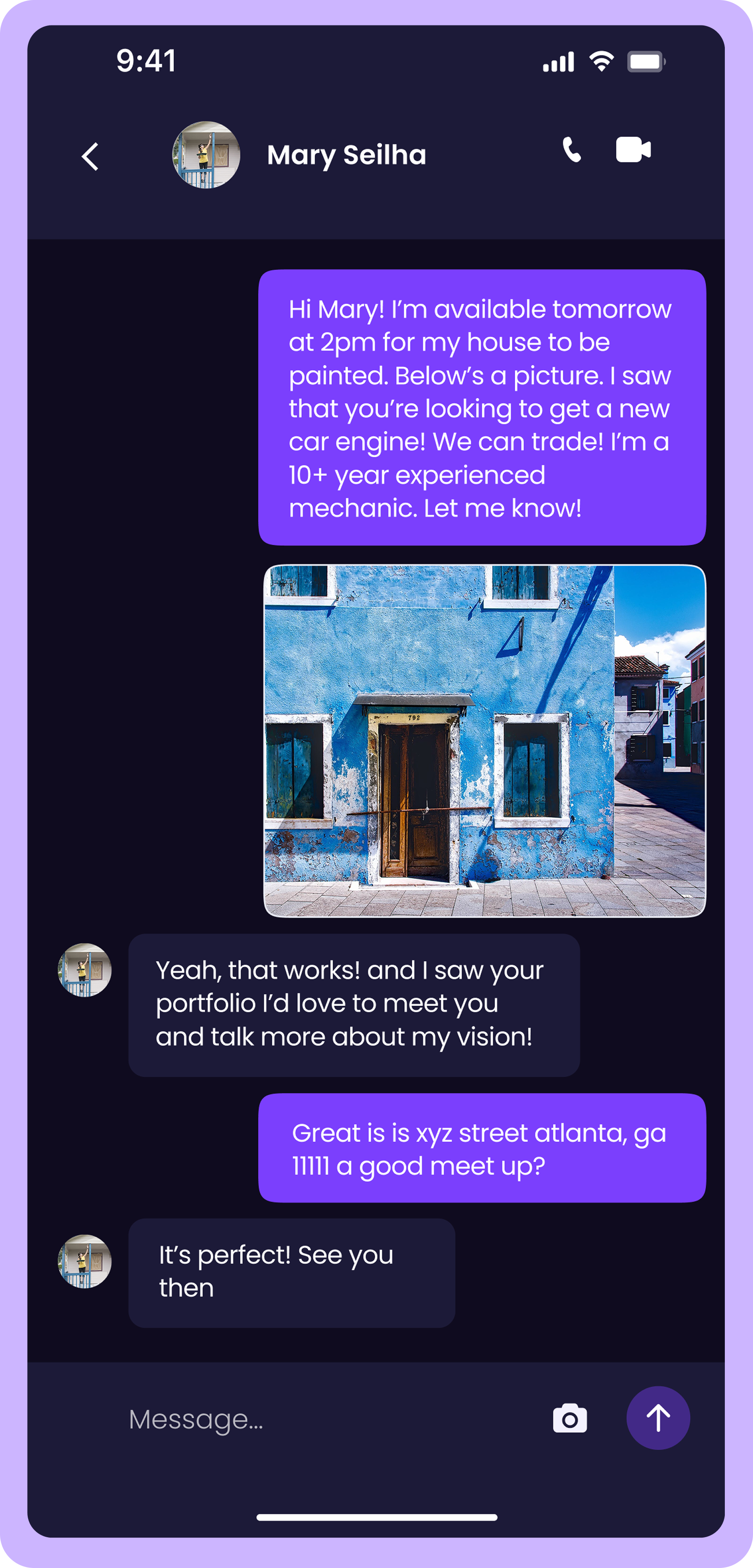
BRTR transforms the bartering game. Verified user credibility and clear service, and it.s way more trustworthy now.Jonathan Hebron · College Student · Bartering for 2 years
What testing revealed.
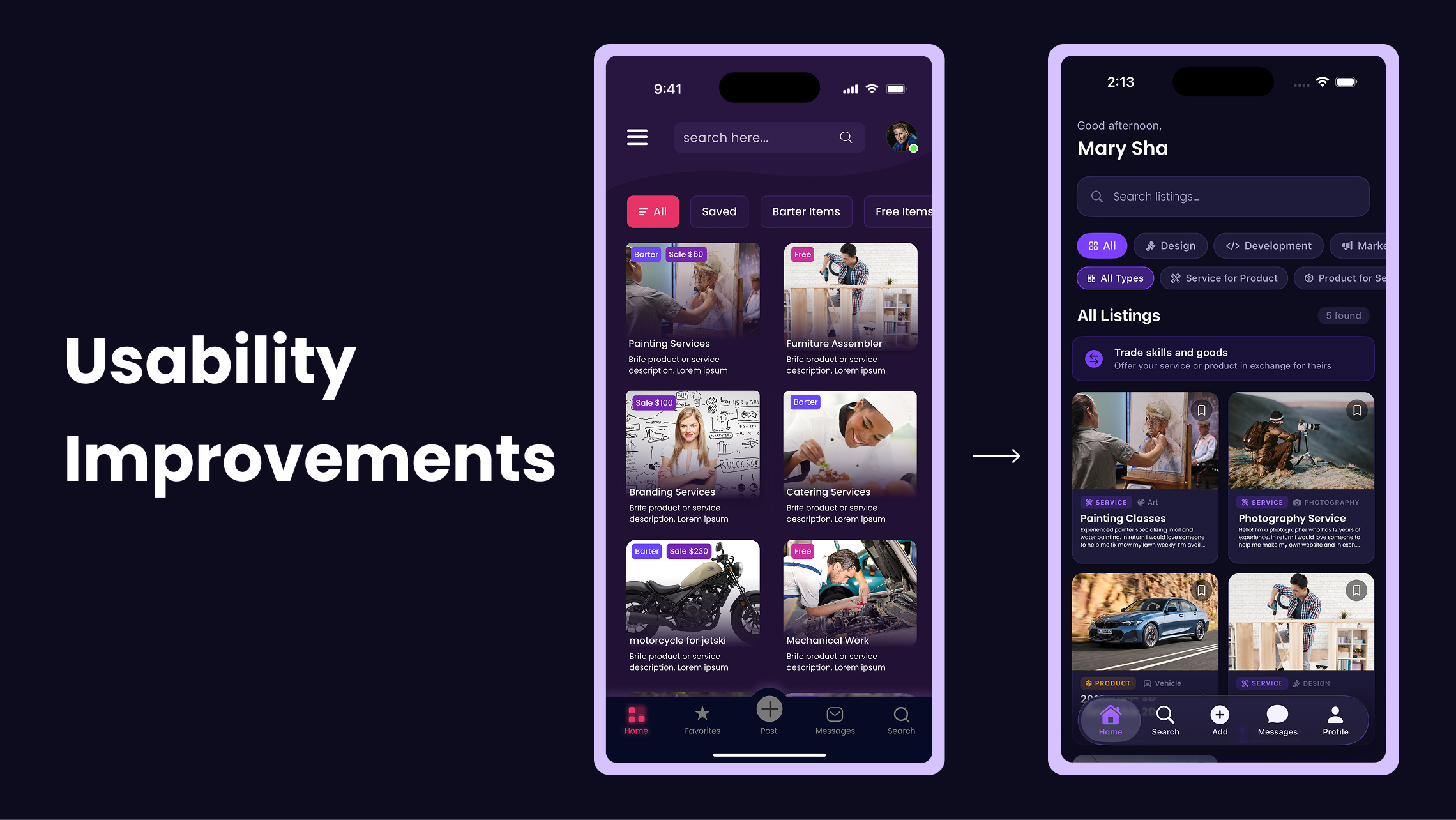
Post button wasn't visible enough
Some users took longer to locate the post button during testing. We enhanced its visibility by increasing size and contrast, and moved it to a more prominent position in the navigation; reducing time-to-post significantly.
Users wanted to save services
Testers frequently mentioned wanting to bookmark services for later. This wasn't in the original design, so we added a "Save for Later" function based directly on this , a feature that became one of the most-used in subsequent testing rounds.
Logo visibility on legal screens
Feedback suggested enlarging the logo on the terms and conditions page. Small detail, but it reinforced brand trust at the exact moment users were asked to agree to terms; an important psychological touchpoint.
Style guide & design system.
We established a cohesive visual language with a focus on clarity and trust; consistent color schemes, typography, and iconography to guide users seamlessly through the app. A detailed style guide ensured future updates stay aligned with the app's safety and transparency goals.
What we learned.
BRTR offers a unique value proposition: service-based bartering that lets users save money, develop new skills, and expand their networks. The key insight was that addressing safety concerns and promoting transparency aren't just features; they're the foundation that makes everything else work.
Safety is the prerequisite, not a feature
Without trust infrastructure (ID verification, reviews, direct communication), no amount of good UX matters. Users won't engage with a bartering platform if they don't feel safe. Safety had to be built into the core flow, not bolted on.
Service bartering is an untapped market
97% of respondents had a service they could offer. The problem was not demand; it was that no platform existed to facilitate it. BRTR validated that there's a real audience for skill-based exchanges.
Usability testing catches what you can't imagine
The "Save for Later" feature came entirely.from user feedback; we hadn't considered it. Some of the most valuable features aren't on your roadmap until real users show you what's missing.
Designing for trust requires transparency at every layer
From verified badges on profiles to visible review histories to video calls before trades, every interaction needed to communicate "you can trust this person." Trust isn't one feature; it's a design philosophy applied everywhere.